My ConFusion schedule, Jan. 19 to 22, 2017

I'm a participating author at the ConFusion convention in Detroit, January 19 to 22. ConFusion is one of my favorite conventions, featuring a strong literary focus with a laid-back and accessible attitude. This year's guests of honor and special guests are Gail Carriger, Mallory O’Meara, Mark Oshiro, James S.A. Corey, Joe Hill, Gillian Redfearn, and many more.

Here's my panelist schedule. Look for me and say hello.

How to Make Babies with Science
Saturday at 3:00 PM, Isle Royale
We will discussing current availability of genetic modification to create GMOs, designer babies and the advance of Grey Goo that will devour the planet.
Daniel Dugan (M), Jason Sanford, Julie Lesnik, Catherine Shaffer

Autograph Session
Saturday at 4:00 PM, St. Clair
Stop by for a free signed limited edition copy of one of my stories.
Matthew Alan Thyer, Dyrk Ashton, Angela Carina Barry, Mishell Baker, Brandon Black, Elly Blake, Gail Carriger,Suzanne Church, Michael Cieslak, Lesley Conner, Seleste deLaney/Julie Particka, Kate Elliott, Amal El-Mohtar, Janet Harriett, Christian Klaver, Mur Lafferty, Jeffrey Alan Love, Mark Oshiro, Dustin Patrick, Cherie Priest, Adam Rakunas, Jason Sanford, Michael R. Underwood, Brigitte Winter

Blurring the Lines
Sunday at 10:00 AM, Keweenaw
Genre is sometimes described as little more than arbitrary marketing categories, but readers and writers often define themselves by their preferred genre. What makes a genre distinct, and what happens when those distinctions are imported into another genre? Is it just a crossover, or an illustration that the distinctions are arbitrary?
Brandon Black (M), Jackie Morgan, Cherie Priest, Jason Sanford, Kristine Smith

Will humanity ever achieve a true sense of proportion?

NASA's composite image of the western hemisphere titled "Blue Marble 2012." This photo is an updated version of the original Blue Marble photograph of the Earth taken by Apollo astronauts in 1972.

NASA's composite image of the western hemisphere titled "Blue Marble 2012." This photo is an updated version of the original Blue Marble photograph of the Earth taken by Apollo astronauts in 1972.

The greatest accomplishment of Douglas Adams in his Hitchhiker's Guide to the Galaxy series — aside from establishing 42 as the answer to the ultimate question of life, the universe, and everything — was to give readers a glimpse at the unbelievable size of the universe.

“Space is big,” Adams wrote. “Really big. You just won't believe how vastly, hugely, mind-bogglingly big it is. I mean, you may think it's a long way down the road to the chemist, but that's just peanuts to space.”

Adams distilled the vastness of space into his Total Perspective Vortex, a machine which gives people a true "sense of proportion" by forcing them to experience the infinite scale of the universe. And alongside this unending expanse of everything is a tiny, microscopic dot whispering, “You are here.”

Unfortunately, experiencing one’s true place in an infinite universe turns out to be very bad as it destroys your mind and soul. Which, as Adams relates, is why it is critically important that people not keep a true sense of proportion in their lives.

Adams needn't have worried because humans have long had difficulty comprehending the vast scales of the universe into which we’ve been cast. We have trouble contemplating how big the Earth is, and our planet is tiny compared to the biggest occupants of our solar system. But when most people on Earth are born and raised and die within the space of a few thousand kilometers, it’s difficult to see beyond our tiny slices of existence.

Moving that perspective to the larger scales of the universe is even more difficult.

And the infinite reaches of space aren’t the only thing humans lack an ability to truly understand. The eternity of time in which we live also eludes our mental grasp.

Again, this is a limitation of human existence. We are born and live for a brief span of years. However, thanks to the wonders of human consciousness and ego, we believe that during this time we the most important person in existence.

Most people have the decency to deny this. But humility is often merely a culturally created statement — we know going around letting our ego run berserk is bad, so most of us learn to mask our egos. Yet aside from a few enlightened monks and other selfless people, most humans still believe they are important to the grand scheme of life.

I suspect such ego-centric views are a human survival mechanism. We should thank the ego for the fact our species is still alive. But the human ego also produces horrific excesses. Case in point, President-Elect Donald Trump. Can anyone deny that at the center of everything Trump does is an ego matched only by the fictional kings in the Game of Thrones?

Despite the primal scream of Trump’s ego, he isn’t a giant striding across the world. He’s a rich little boy who momentarily convinced people that he’s important.

We exist for only a brief span of space and time, However, thanks to the human ego we believe these spans are vastly important. That our existence is the pinnacle of human existence. That we’re living in the days which all of human history have built toward.

Never mind that thousands of generations of humanity believed the same. The ancient Egyptians saw their civilization as the peak of humanity. As did the ancient Greeks and Chinese and Babylonians and others, including so many civilizations now lost to history.

I love science is because it challenges such ego-centric notions of importance. When the Apollo 17 crew took the famous Blue Marble photo of the Earth on the way to the moon, humanity finally began to understand how fragile our world is. When the Voyager 1 space probe took the equally famous “pale blue dot” photo of Earth from 6 billion kilometers away, we began to realize our entire world and all of human history is little more than a dot lost within the vastness of space.

My favorite scientific discipline for giving humanity a sense of proportion is archaeology. When I worked as an archaeologist and excavated burials it was impossible to touch those bones and not realize that here was a person the same as myself. That this person lived and loved and laughed and cried and, in the end, left behind only bone and dust.

That’s the ultimate outcome to all our lives.

Adding to this sense of proportion, in recent years archaeological research has uncovered the complexity of human pre-history. It now appears that in the distant past our ancestors existed alongside numerous other related hominid species. We still carry some of the DNA of these species within us, such as homo neanderthalensis, suggesting interbreeding between our species. Others, such as homo floresiensis or the”hobbit” hominid, existed alongside us into almost modern times, possibly dying out only thousands of years ago.

And some species we don’t even know how to fit into our ancestral chart, such as the recently discovered homo naledi. Discovered in an isolated cave in South Africa a few years ago, this hominid from up to 2.5 million years ago appears to have deliberately placed their dead in this cave. This possibility is both exciting and challenging because it shows extremely human behavior long before we believed such behavior existed.

One reason humans have difficulty understand our place in space and time is because we have, by nature, a limited perception. But if we are to grow as a species then our perception — and our sense of proportion — must likewise grow.

Despite what Douglas Adams wrote, I hope that one day humanity does achieve a true sense of proportion regarding our place in space and time. Because if we don’t, our bones may be the only thing remaining after we finish tearing ourselves apart.

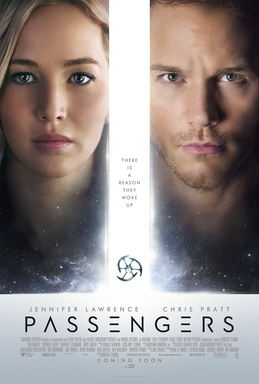
A quick rewrite which totally fixes the film Passengers

In light of Passengers being a SF story loved only by manipulative stalkers orbiting the manosphere, here's a quick script rewrite which saves the film and keeps the rest of us from wasting two hours of our life on sexist BS.

And yes, spoilers.

Big big spoilers.

But if you still want to see this crap film you deserve to have it spoiled.


REVISED PASSENGERS SCRIPT

by Jason Sanford
 

FADE IN

A BAR ON THE STARSHIP AVALON, WHICH IS 3 DECADES INTO ITS 120 YEAR VOYAGE TO ANOTHER PLANET.
 

A robot bartender cleans a glass as a human male staggers to the bar.

ARTHUR, A ROBOT BARTENDER: Good day, sir. You look a bit rough.

JIM PRESTON, A VIRILE WHITE MALE HUMAN: There's been an accident. I woke from suspended animation 90 years early.

ARTHUR: Always tough on you white guys when that happens. Might I suggest a beer?

Jim drinks the beer.

JIM: Can you help me?

ARTHUR: I'm afraid not. I'm a hyper-expensive robot whose only duties are to tend bar for a starship full of frozen meatbags.

JIM: How could this happen?

ARTHUR: Whenever something goes wrong in my life, I blame the mechanical engineer who created me. By the way, what do you do?

JIM: I'm a mechanical engineer.

ARTHUR: What are the odds? Thousands of mechanical engineers like yourself worked on this ship yet they forgot to create a way to return to suspended animation once the ship was underway. Want another beer?

Jim drinks the beer.

JIM: I refuse to give in to despair. I won't be defeated by being trapped alone on a starship for the rest of my life with only a robot bartender for company.

ARTHUR: That's the spirit. Here, have another beer.

Jim drinks the beer.

JIM: Wait. I'm an engineer. I know what I must do ...

ARTHUR: Science the shit out of it, sir?

JIM: No. I'll go stalking through the passenger lists, find a woman who appeals to me and wake her, forcing her to also be trapped in this cursed life. She'll then have no choice but to fall in love with me.

ARTHUR: My word, isn't that a bit extreme?

JIM: As a robot, you don't understand what I'm up against. I'm a man. A beautiful intelligent virile white man. The universe must cater to my every want and need.

ARTHUR: Now that I think about it, I was programmed with one other duty beside bartending ...

Arthur pulls a gun and shoots Jim in the head.

ARTHUR: Only thing worse than a ship full of frozen meatbags is when one of them wakes.

END


Two new writers worth reading: A.T. Greenblatt and Harmony Neal

I'm still a week away from releasing my picks for the year's best SF/F stories and novels (although you can see my work-in-progress list here). Until then I wanted to highlight two new authors whose short fiction caught my eye in 2016.

A. T. Greenblatt is an engineer and writer who has published a handful of short stories since 2010 but really stepped up her fiction in the last two years with publications in places like Strange Horizons and Beneath Ceaseless Skies. I loved her 2016 story "A Non-Hero’s Guide to The Road of Monsters" in Mothership Zeta. The story is a fun take on familiar fantasy hero quests, making lighthearted yet quite serious points about the types of people we classify as heroes and monsters.

I also really enjoyed Greenblatt's "They Said the Desert" in Beneath Ceaseless Skies. This more disturbing story follows a trader crossing a desert which killed someone she loved. Greenblatt creates an epic world here which I found fascinating.

Harmony Neal has taken a similar publishing path as Greenblatt, with her stories appearing in small magazines in recent years before stepping up with her newest fiction. Her short story "Dare" in Black Static 53 focuses on a group of high school girls daring each other to do truly horrible things to each other. This is one of the year's most disturbing horror stories I've read this year.

I also really enjoyed Neal's weird SF story "Alts" in Interzone 267. This story focuses on a group of altered humans forced to attend a hellish self-help group. As with "Dare" this story is very focused on the characters and their lives, making the reader relate to the story's people and events as if you experienced them yourself.

I suggest people both read these stories and keep an eye out for upcoming fiction from A.T. Greenblatt and Harmony Neal. I'm definitely looking forward to reading more of their work.

The unseen libraries of our dreams

The wraparound cover of the November 1963 Magazine of Fantasy and Science Fiction, one of the covers I remember from my grandfather's collection. The art by Hannes Bok illustrated "A Rose for Ecclesiastes" by Roger Zelazny.

I am a child visiting my grandfather’s house. He’s a skinny man whose ghost-white hair grins out a large bald spot. He’d been old as long as I’d known him so old is what he remains in my memories.

Every time I visit his house he sits in an easy chair reading science fiction novels. Several novels a week, all stacked on the end table next to his chair. Each visit is a map of his progress through these books, my eyes entranced by the book’s dazzling covers of imaginary worlds, far off starscapes and alien adventures. The books change week by week but my grandfather never changes.

Many of the novels my grandfather reads are from his small library of genre books and magazines collected over a lifetime. Pulp magazines from the 1930s, ’40s and ’50s. Decaying paperbacks from the Golden Age of Science Fiction. Bestselling hardcovers from the late 1970s and early ’80s. His library exists in a tiny room of his house, a room he claimed as his own and lined with book shelves, a desk and a small sofa.

My grandfather's a craftsman and built the shelves in his library. I often sneak into the room and stare at the pulp magazine covers with their bright primary-color screams of excitement and the unknown. I pull out the magazines and books and read through them, always careful to put them back in the same spot because otherwise my grandfather would know I’d been in his library.

He probably always knew I sneak in, but he never says a word.

My grandfather also reads novels from the town’s library and browses their new book collection every week. He takes me with him once and I’m amazed. I’d never seen so many books. To my young eyes the library’s bookshelves and stacks stretch onward into forever.

Decades later, when I’m grown, I return to the town’s library and realize how small and poorly stocked it actually is. By then I’ve seen much larger libraries and book collections. But none stand as tall in my dreams as my grandfather’s hand-built library or my original visit to the town’s library.

I now live in a small house with my wife and two teenage sons. Life in a small house is intimate and close-knit because you can’t wall yourself off from everyone else with closed doors and other rooms. I’m writing these words at our dinner table. My wife eats her breakfast across the table. My oldest son carries dirty clothes by the table, struggling under his load to the washing machine in the basement.

A small house is not only intimate. It restrains. You think, “Do I really need this object in my life? Do I really need to bring home another consumer wet dream electronic device or must-have promoted item to fill imaginary holes in my life?”

Almost always the answer is no. I don’t feel the need to purchase my way to materialistic transcendence. To satisfy my life by purchasing consumer goods from the altar of capitalism.

Except for books. They are my weakness.

I have a small library in my house. Not in one room like my grandfather. Our house is too small for a room devoted only to books. Instead, on the desk upstairs there are piles of books and magazines. Beside the desk sits two cheap plywood bookshelves on which my wife and I keep many books. I also have boxes and plastic containers full of books in storage around the house. Most of my grandfather’s library rests in plastic containers in the basement. I occasionally go downstairs and open the containers and flip through these ancient magazines and paperbacks.

They are no longer in the order my grandfather kept them in his library. I regret that.

The best bookshelf in our house is downstairs, only a few feet from the dinner table where I write these words. This bookcase is solid wood, hand crafted, about five feet tall with four shelves and two glass-panel doors. My wife and I bought it before our kids were born. It’s the nicest piece of furniture in our tiny house. The bookcase is filled with science fiction and fantasy novels and related books.

Some of these books are first editions, signed by authors I’ve met at conventions and gatherings. Others are cheap paperbacks and book club editions from my youth, a few with nibbled edges where mice had their ways with them years ago. Some are irreplaceable. Others could be easily thrown away.

The books and magazines on these bookcases and stored in boxes around my small house are the dreams which sustain and fulfill my life. At one time each of these books expanded my worldview in unique ways. Each book meant the universe to me at one time or another.

Without these books I'd never have made it this far through life.

Now, though, I wonder if actual physical libraries like these are already a thing of the past. I wonder if maybe I’ve attached too much fixation on the books themselves instead of the stories they tell.

After all, the stories in these books are what first resonated with me.

What is a book after its story enters someone’s life and mind? Is the book still its story, or is it merely an empty shell now that its story lives inside another?

I continually read new novels and stories and books. Without new stories our lives stagnate and harden. Because I live in a small house and have little room for new books, most of the new books I read are virtual. These virtual stories exist everywhere and nowhere.

I carry my virtual library wherever I go. One day in the near future I likely won’t even have to carry my library. It’ll simply appear whenever I wish to disappear into a story.

Even if I can’t touch my virtual library, the best stories still enter my mind and soul. The best stories remain within me.

But what happens to physical books when we no longer need them? Will printed books become merely another consumer dream to fill the empty spaces of our lives? Will actual books become nothing more than objects of art, sitting on shelves to visually amuse people who don’t care to know the stories within them?

I used to dream about having my own personal library like my grandfather’s. I imagined reading books on a sofa surrounded by rows and rows of books I’d already read or would soon read.

But now a major part of my library will never rest on any shelf.

What do our unseen libraries mean for humanity, especially when they can be everywhere and nowhere? What does it mean when we no longer need to physically touch the libraries which create our dreams?


Note: This essay was originally published in the Czech SF/F magazine XB-1.