
My MidAmeriCon II schedule
I'm a participating author at MidAmeriCon II, August 17 to 21 in Kansas City. This will be my first WorldCon and I look forward to seeing everyone.
Here's my schedule. Also note that I'll be giving away signed limited edition copies of my novelette "Blood Grains Speak Through Memories," published earlier this year by Beneath Ceaseless Skies. While supplies last, as the cliche goes.
The Future of Forensics
Thursday August 18, 12:00 - 1:00 p.m., 2209 (Kansas City Convention Center)
Forensic scientists analyze scientific evidence in criminal investigations and as with all science the methods available grow and change and improve on a regular basis. This panel of experts discuss what is current and lead to where it might go next.
Jason Sanford, Alistair Kimble (M), Jack Campbell Jr., Diana Rowland, Anna Yeatts
Autographing: Sharon Joss, Anna Kashina, Mur Lafferty, Jason Sanford
Thursday August 18, 3:00 - 4:00 p.m., Autographing Space (Kansas City Convention Center)
Stop by for an autograph and pick up a free limited edition copy of my novelette "Blood Grains Speak Through Memories," published earlier this year by Beneath Ceaseless Skies.
Knock on Wood. From Squirrel Girl to Lumberjanes
Thursday August 18, 5:00 - 6:00 p.m., 2207 (Kansas City Convention Center)
What the junk?! In the last couple of years we've seen the growth of comics that might superficially appear to be aimed at a YA audience, however these titles are hitting the mainstream with a vengeance. Marvel are leading the pack with Squirrel Girl, Ms Marvel and Captain Marvel, but there's also a vast amount of Indie work coming through such as Lumberjanes, Space Dumplin', Kaos Komics and Footloose. Our panel discuss why these titles are so popular, and what they have to offer both new and established audiences.
Tom Galloway, Jason Sanford, Adam Rakunas, Rebecca Schwarz (M), Catherine Lundoff
Trends in Magazine Publishing
Friday August 19, 2:00 - 3:00 p.m., 3501D - A/V (Kansas City Convention Center)
A lot of things have changed for magazine publishing. What's the beat way in, and how do we write for a genre that is moving across media?
MR. Donald Douglas Fratz (M), John Joseph Adams, Neil Clarke, Shahid Mahmud, Dr. Mary Anne Mohanraj, Jason Sanford
Kaffeeklatsch: Richard Hescox, Rebecca Moesta, Jason Sanford, Martha Wells
Saturday August 20, 10:00 - 11:00 a.m., 2211 (Kansas City Convention Center)
Stop by and pick up a free limited edition copy of my novelette "Blood Grains Speak Through Memories," published earlier this year by Beneath Ceaseless Skies.
Archaeology in SF
Saturday 2:00 - 3:00 p.m, 2503B (Kansas City Convention Center)
Forget Indiana Jones, learn what archaeologists really do and how science fiction and fantasy get it right and wrong.
Dana Cameron, Rhiannon Held, Jason Sanford (M), Jack McDevitt, Ms Rosemary Claire Smith
Note: I used to be an archaeologist and have strong views on how that science is depicted in SF.
Magazine Group Reading - Apex
Saturday 3:00 - 4:00 p.m., 2504B (Kansas City Convention Center)
Our Magazine Group Reading Series continues with a special group reading that features authors from Apex Magazine.
Jason Sizemore (M), Ms Rachel Swirsky, Jason Sanford, Kate Elliott, Foz Meadows, Adam-Troy Castro
Hybridity in Comics
Sunday 10:00 - 11:00 a.m., 2503B (Kansas City Convention Center)
"The hybrid constantly betrays the reader as it switches from one formula to the other, shocking and surprising us and breathing new vividness into the familiar" (Ada Palmer). As with any evolving genre, comics borrow some elements from elsewhere, cross thematic genres, and learn from their peers, both historical and contemporary. Our panel discuss some of the ways that hybridity benefits the genre, and helps it grow.
Ada Palmer (M), Jason Sanford, Jessica Guggenheim, Mr. Stephen Stiles, Ms. Lynne M. Thomas
Criticism in Speculative Fiction
Sunday 12:00 - 1:00 p.m., 3501F (Kansas City Convention Center)
More than just a review, criticism places a piece of literature in the overarching field of speculative fiction. Critics discuss works in relation to what has come before, perhaps even trying to establish the importance of an author or work beyond popularity. What is the role of a critic? What different types of critics are there, and do some hold more sway than others?
Dr. Amy H. Sturgis, Dr. Tom Easton, Jason Sanford
My novelette “May Our Voices Sing Like Blood from Open Wounds" (with praise for Edmund Schubert)
Artwork for "May Our Voices Sing Like Blood from Open Wounds" created by Dean Spencer.
My first-ever vampire novelette, “May Our Voices Sing Like Blood from Open Wounds," has been published as the cover story for InterGalactic Medicine Show. The amazing artwork was created by Dean Spencer.
Robert L Turner III, reviewing the issue at Tangent Online, says "The story is well paced and extremely well written, hinting at deeper meanings while only occasionally becoming explicit. While not perfect, this is the best short story I have read in some time and deserves careful reading and perhaps award nominations."
Not only is this the 50th issue of IGMS, it's also Edmund Schubert's final issue as editor. I'll miss working with Edmund, who is a class act and one of those unsung heroes who make the SF/F genre what it is.
Last year Edmund was nominated for the Hugo Award for Best Editor, Short Form. While Edmund had long been on my ballot for a Hugo nomination, in 2015 he was also on the Rabid Puppies' slate, a fact which caused him a good bit of pain. He eventually withdrew from consideration. You can read his statement on why he did this — which proved yet again how classy Edmund is — here.
Prior to Edmund withdrawing I wrote the following, which I feel still really, really applies:
As editor of Intergalactic Medicine Show, Edmund has been extremely supportive of new writers no matter their politics or backgrounds or beliefs. The list of writers who've earned one of their early publishing credits through Edmund reads like a "who's who" of the new generation of SF/F authors, and includes Tony Pi, Saladin Ahmed, Aliette de Bodard, Nancy Fulda, Eric James Stone, Eugie Foster, and many more.
And yes, I'm biased about Edmund because he accepted my first-ever professionally published story. He also published my first short story collection Never Never Stories while working as the editor of Spotlight Publishing. And he commissioned this amazing artwork from fellow Hugo finalist Julie Dillon for my story "The Never Never Wizard of Apalachicola."
But despite IGMS being one of our genre's few professional-level magazines, Edmund has never appeared on the Hugo Award Best Editor ballot. Again, I'm not naive — I know it's because of two reasons. First, Edmund has never been among the trendy insiders in our genre. And it's also likely some people never considered him for the award because the full title of his magazine is Orson Scott Card's Intergalactic Medicine Show. That OSC name trips up people and they hold it against Edmund.
Which is a true shame. After all, OSC doesn't run the editorial side of the magazine. He merely supports the magazine. I am able to separate OSC's political views, which I disagree with, from his support of new writers. This is similar to how most people in our genre support the Writers of the Future contests and programs even though they were founded by L. Ron Hubbard and receive funding from Scientology-related ventures.
Edmund has a new SF short story collection out, so go read the book to learn more about his fiction. I wish Edmund the best in his life and his writing and all he takes part in during the years to come.
I also wish our genre would remember the common dreams and goals which bound us together in the first place, no matter our differences.
We should never forget to notice the good people all around us.
People like Edmund Schubert.
2016 Hugo Awards: Despite pups, good works still make ballot
The 2016 Hugo Awards final ballot has been announced by MidAmericCon II and, as expected, a good deal of the Rabid Puppies' slate are among the finalists. File 770 has an excellent breakdown of which works and authors made the ballot because of RP slate voting.
The relative good news, though, is that more non-slate works and authors made the ballot than last year, and many of these works and authors are very deserving of Hugo Award consideration. For example, I loved both The Fifth Season by N.K. Jemisin and Uprooted by Naomi Novik and could easily see either of them winning the novel category. The same with Alyssa Wong in the Campbell Best New Writer category. Most other Hugo categories also have a few award-worthy options.
There are exceptions. The short story category is completely filled with the RP slate, including works like "Space Raptor Butt Invasion" by Chuck Tingle which no one can deny made the ballot for no reason other than outright trolling. The same with the Best Related Work category.
There are also authors who made the ballot with slate support but didn't ask to be included, such as Andy Weir of The Martian fame along with many of the films and semiprozine finalists who were slated without their consent. As a result Hugo voters will have to go through each category, consider the nominated works, and make a decision on how to vote. If that vote is No Award, then so be it.
But never forget that the goal of the Rabid Puppies is to destroy the Hugo Awards. That's why they included publications like Beneath Ceaseless Skies and Strange Horizons on their slate — they want people to vote No Award on publications which are the exact opposite of everything the Rabid Puppies stand for. It's up to Hugo voters to see this trick and not fall for it.
After all, as John Scalzi asks, "how much credit should (the puppies) get for nominating already-celebrated work?" The answer is none.
In the end, read and consider all the works on this year's Hugo ballot and vote for those which are worthy of winning. And as with last year's Hugos, if a category has no deserving finalists then No Award is always an option.
And before anyone asks, yes, rule changes being considering at this year's Worldcon will make it more difficult for slates to dominate the Hugos in the future. I also don't believe a second year of puppy madness will permanently destroy the Hugo Awards' brand or importance. People are able to recognize hateful trolling when they see it, and hateful trolling is what people will remember about this whole affair in the decades to come.
Chinese edition of The Ships Like Clouds, Risen By Their Rain
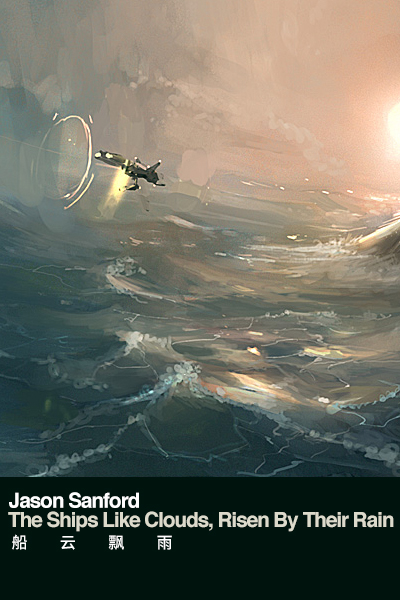
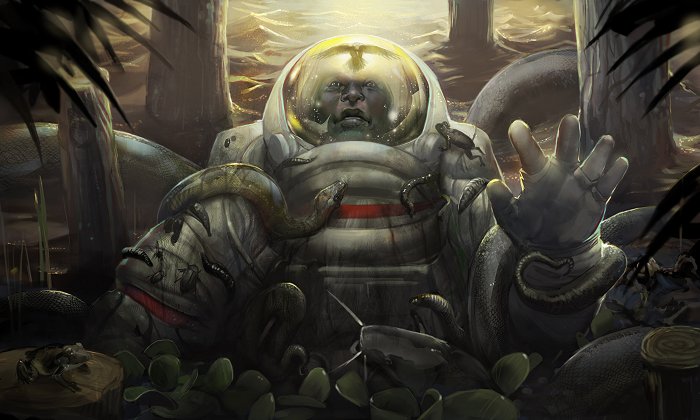
The Chinese edition of The Ships Like Clouds, Risen By Their Rain is now available as a stand-alone ebook on Douban Read.
So far I've been really impressed with Douban Read, which translates and publishes e-editions of genre works by a number of authors including Ken Liu and Aliette de Bodard.
Douban Read takes an innovative approach to translating foreign works. They have a "foreign works in translation page" where they allow different translators to post sample translations of upcoming books. The editors then review these translations and pick the best translator to go with the story. Among the books they're currently translating are The Waiting Stars by Aliette de Bodard, Help Me Follow My Sister into the Land of the Dead by Carmen Maria Machado, The Elephant and Macaw Banner by Christopher Kastensmidt, and my novella Sublimation Angels.
To purchase and read the Chinese edition of The Ships Like Clouds, Risen By Their Rain, go here.
A short fiction Dragon Award in honor of Eugie Foster
Eugie Foster working on the Daily Dragon at Dragon Con.
Dragon Con has announced the creation of the Dragon Awards, which will "recognize outstanding achievement in science fiction and fantasy literature, comics, gaming and filmed entertainment." The awards will be selected by fans in an open nomination and voting process.
Complete information is available on the award's website.
I think this is a great idea and look forward to taking part as a genre fan. I also think this will go a long way toward raising awareness about the different literary subgenres recognized in the award.
In fact, my only criticism of the award is that it lacks a short fiction category. On one level I understand this decision since short fiction is not as popular as novel-length fiction. However, short fiction is still a powerful force in our genre and one well worth honoring and recognizing.
My hope is that in the future Dragon Con will consider adding a short fiction category or two to the Dragon Awards. And perhaps they could do so while also honoring a short fiction author who devoted so much of her life to the convention: Eugie Foster.
For many years Eugie edited the Daily Dragon, the official publication of Dragon Con. Eugie deeply loved Dragon Con, perhaps as much as she loved writing short fiction. If Dragon Con decides to create a short fiction award in the future it would be a fitting honor if they named or hosted the award in Eugie's name.